


Trees vs insurance companies
Trees vs insurance companies
by Kat Scott
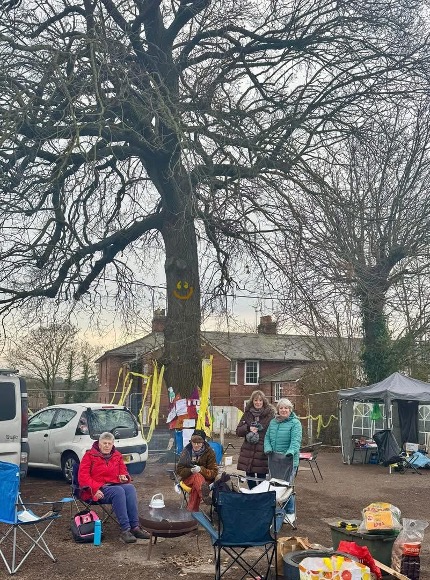
In early 2025, despite concerns raised by residents, Wivenhoe Town Council in Essex announced that a 170-year-old oak tree, known locally as the Old King George, and a neighbouring horse chestnut were to be felled, after being blamed for causing subsidence in two properties in a nearby Victorian residential terrace. The decision was taken under pressure from the insurer Aviva, which has threatened the council with a potential nuisance claim if it does not act. Aviva also happens to be the council’s insurer.
The oak, in particular, is a significant tree. Oaks can support more than 2,300 species and, at this age, are effectively irreplaceable in environmental terms. Together, the trees provide shade to a children’s playground and are a much-loved feature of the town. Largely because the local planning authority relied on Aviva’s evidence, which local people have still not seen in full – it decided against granting a Tree Preservation Order (TPO).
In response to the council decision, I started a petition calling for a transparent decision-making process and independent investigation. Within 24 hours it had gathered more than 1,500 signatures, remarkable in a town of around 10,000 people – and it now has almost 5,500 signatories and continues to grow.
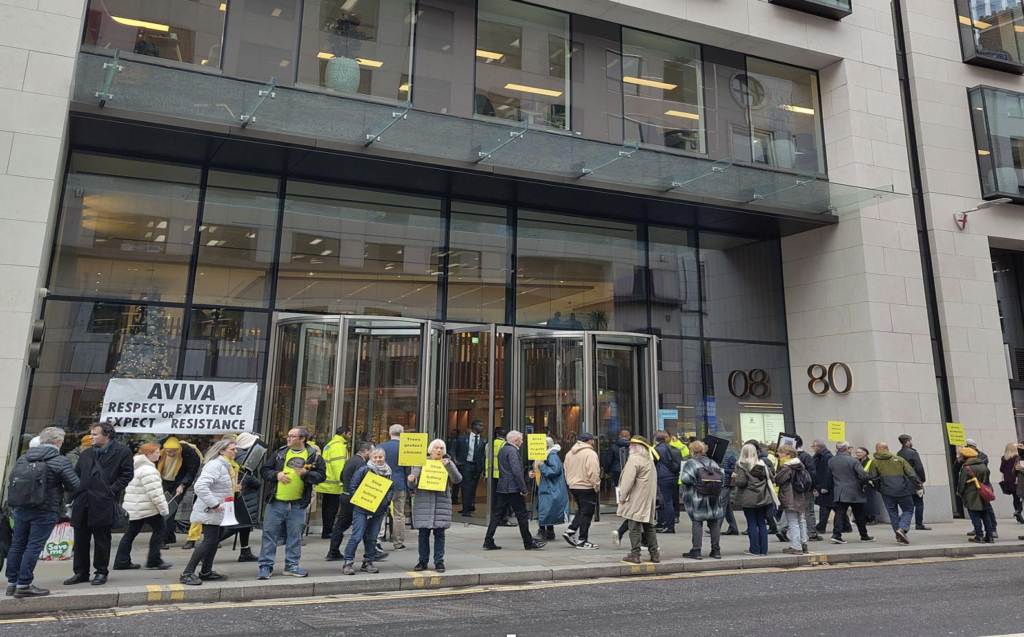
Despite this, plans to fell the trees continued. It appeared that a small council, comprised largely of volunteer councillors and limited paid staff, felt unable to further resist the pressure, despite strong public support for the trees.
That was when a spontaneous group of residents, ranging in age from millennials to octogenarians (some advised by their doctors not to be there), set up a 24/7 tree protection camp in the car park where the oak stands, enduring sub-zero temperatures through January and February last year. That extraordinary act of community resistance forced a more serious dialogue, as it effectively prevented any felling works from taking place without a forcible removal of the protectors.
With the help of Lawyers for Nature and Garden Court Chambers barrister Paul Powlesland, we eventually secured an agreement to delay felling and commissioned a community-funded Independent Expert Evaluation. That report fundamentally challenged the idea that the trees were the sole or primary cause of movement.
Engineers found the terrace was built on poor-quality ground, likely spoil from the construction of the adjacent railway line in the 1880s, and with very shallow foundations. There is a slope down to the railway cutting, vibration from modern freight trains day and night, and unresolved drainage issues. The oak predates the houses. Ground investigations, arboriculture assessments and a review of Aviva’s evidence led the experts to recommend further monitoring and underpinning of the homes as the appropriate long-term solution, not felling. Similar conclusions were reached by engineers appointed independently by one of the affected homeowners.
There is a bigger question at play here. If trees do contribute in part to subsidence, should felling really be the first response of a council with statutory biodiversity duties and a declared climate emergency? Or of an insurer like Aviva with prominent ESG commitments and high profile relationships with the Woodland Trust and the Wildlife Trusts?
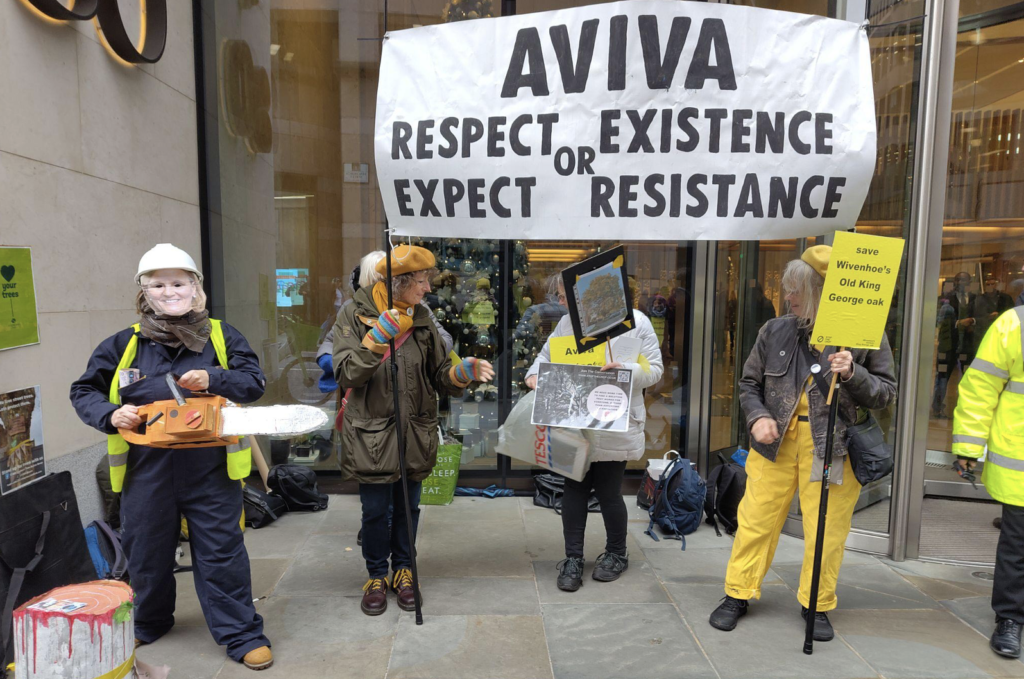
Early on, Aviva claimed that felling was the “most environmentally sustainable” solution because the alternative process of underpinning involved high-carbon concrete. As an architect specialising in sustainability, I challenged this claim as misleading and likely greenwashing, contrary to the Green Claims Code. A high-level carbon comparison showed that the balance of carbon impact is highly case-specific – and focusing on carbon alone ignores biodiversity loss entirely. A complaint was made to the Competition and Markets Authority, but the response highlighted a wider problem: environmental laws are only as effective as the under-resourced bodies tasked with enforcing them. No investigation was opened into the concerns raised.
After the expert report was submitted in March 2025, we hoped it would trigger a reset. Instead, dialogue largely ceased. Through the summer, the trees stood – with thermal imaging showing they cool playground surfaces by up to 6 to 8°C on hot days, a difference that matters for children’s safety.
With no realistic prospect of resolving matters informally and while waiting for statutory processes to complete, I instructed Richard Buxton Solicitors on behalf of the campaign and applied for a Judicial Review, alongside a request for interim relief. On 29th December, the High Court granted an injunction preventing any felling or harm to the trees. That protection remains in place while the court considers what should happen next.
We are now fundraising via CrowdJustice to support the Judicial Review, aiming to build on the £15,500 already raised towards what we’ve been advised is a realistic £30-35,000 budget. This digital effort is being bolstered by in-person pop-up shops, music events and tree-related walking tours held in the community. The public support we continue to receive matters greatly. It reflects a wider discomfort with how decisions of this kind are being made and emboldens us to continue with this course of action.
I am only able to pursue this legal case as a sole claimant because of the protections afforded by the Aarhus Convention, the international treaty that Prime Minister Keir Starmer is considering removing Britain from. Without legal protections like those, cases like ours – where ordinary people and grassroots campaigners challenge powerful corporate interests over environmental harm – would be effectively impossible.
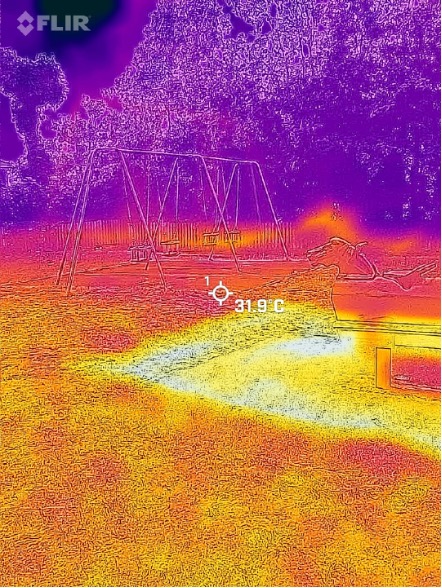
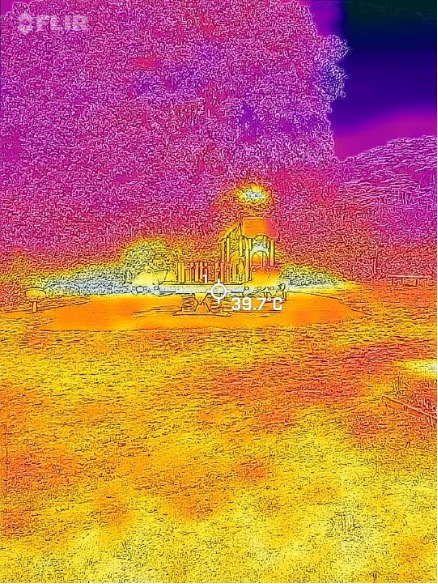
Thermal imaging of the effect of withdrawing tree cover
The decision to take legal action against a small town council has not been taken lightly, particularly given the financial constraints such bodies face. What we do know, however, is that this is not an isolated case. Organisations such as the Canopy Coalition and the Stop Home Insurers Felling Trees (SHIFT) initiative have emerged precisely because similar stories are playing out across the country. It is understood that insurers tend to prefer felling to alternative mitigations, in large part as the ‘cheap and easy option’ with underpinning or root barrier installation more expensive, and with subsidence claims on the rise with climate change exacerbating the causes. We have taken heart however from positive outcomes in cases elsewhere, such as in Thundersley, Frome, Bristol and Coalville, where communities and individuals have been successful in pursuing alternative mitigations, even where subsidence has been definitively caused by trees.
Whatever the outcome of our particular story, our case highlights wider questions. As climate change intensifies subsidence risks, are we really going to cut down mature trees one by one, or will we confront the deeper failures in how our built environment was designed alongside older trees. Why should insurance companies not bear the costs of those risks when this is, after all, what they are paid to do?
We need to ask what would a fair, transparent process for deciding the fate of trees look like, if it did not depend on whether a community can raise the funds to take its case to court? As Britain continues to hold the unfavourable label as one of the most biodiversity-depleted countries worldwide, we must start to take seriously the avoidable loss of each and every older and valuable tree like Old King George.