


How repression became routine
How repression became routine, and why we keep documenting it
by Maya Fitchett
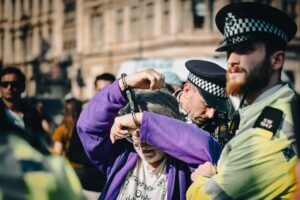
Netpol’s annual State of Protest reports demonstrate a clear trajectory. While the first, This is Repression (2024), concluded that Britain exists within a state of repression, the second, recently released report, How Repression Became Routine (2025) determines that what we are seeing is not just more repression, but that it is becoming normal.
This report makes clear that the standardised approach to policing protest across the country is to treat protest as something to be neutralised or shut down. This can no longer be dismissed as isolated overreach, bad decisions or the heavy-handed approach of a few ‘bad apple’ officers or forces. Rather, it is unmistakeable as a system premised on the suppression of dissent.
What does it mean, then, to document repression once it is no longer exceptional?
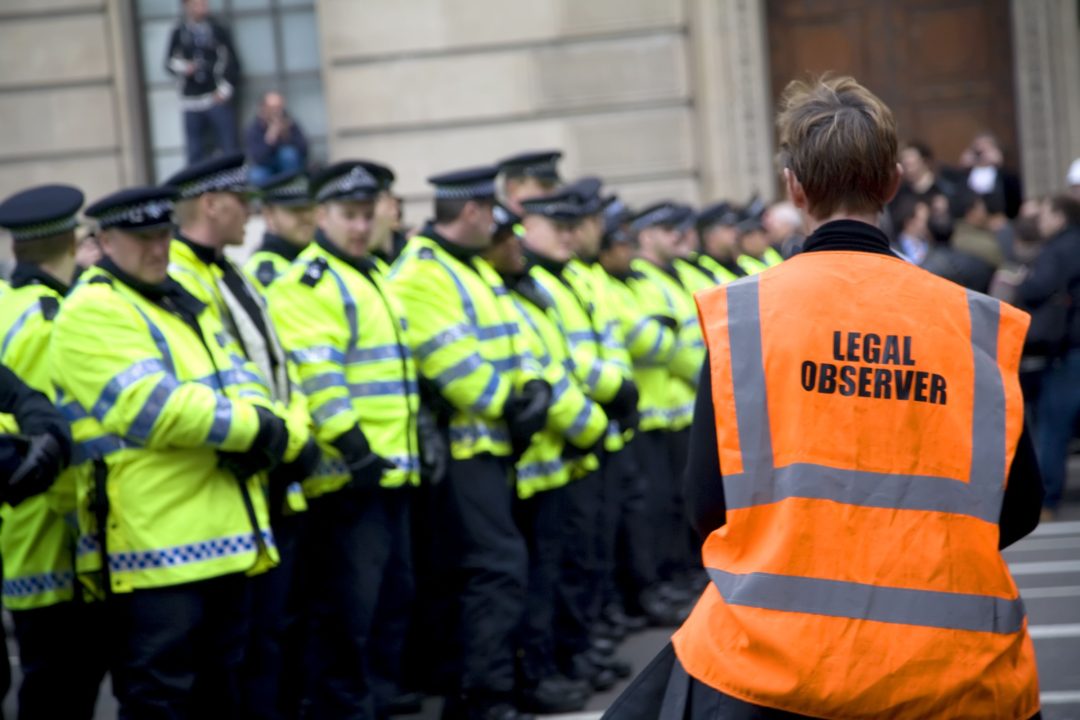
The latest report draws on movement-embedded qualitative research conducted between July 2025 and February 2026, through iterative engagement with grassroots groups, activists, movement organisers, legal observers, protesters and legal, defendant and arrestee support networks. In doing so, it collates findings of those experiencing protest policing on the ground.
What the report finds is that repression is often experienced as a series of isolated incidents: something shocking happens, public attention turns to the most dramatic and outrageous of moments, and then, amidst the endless torrent of bad news in a capitalist world in crisis, something new grips our attention and the repressive incident is pushed aside. For activists, too, incidents are experienced locally, and there is often a pressing need to move on after these experiences to the next campaign or mobilisation. The result is lost movement memory. We lack the time and capacity to process, take learnings and generate the widespread momentum needed to resist repression.
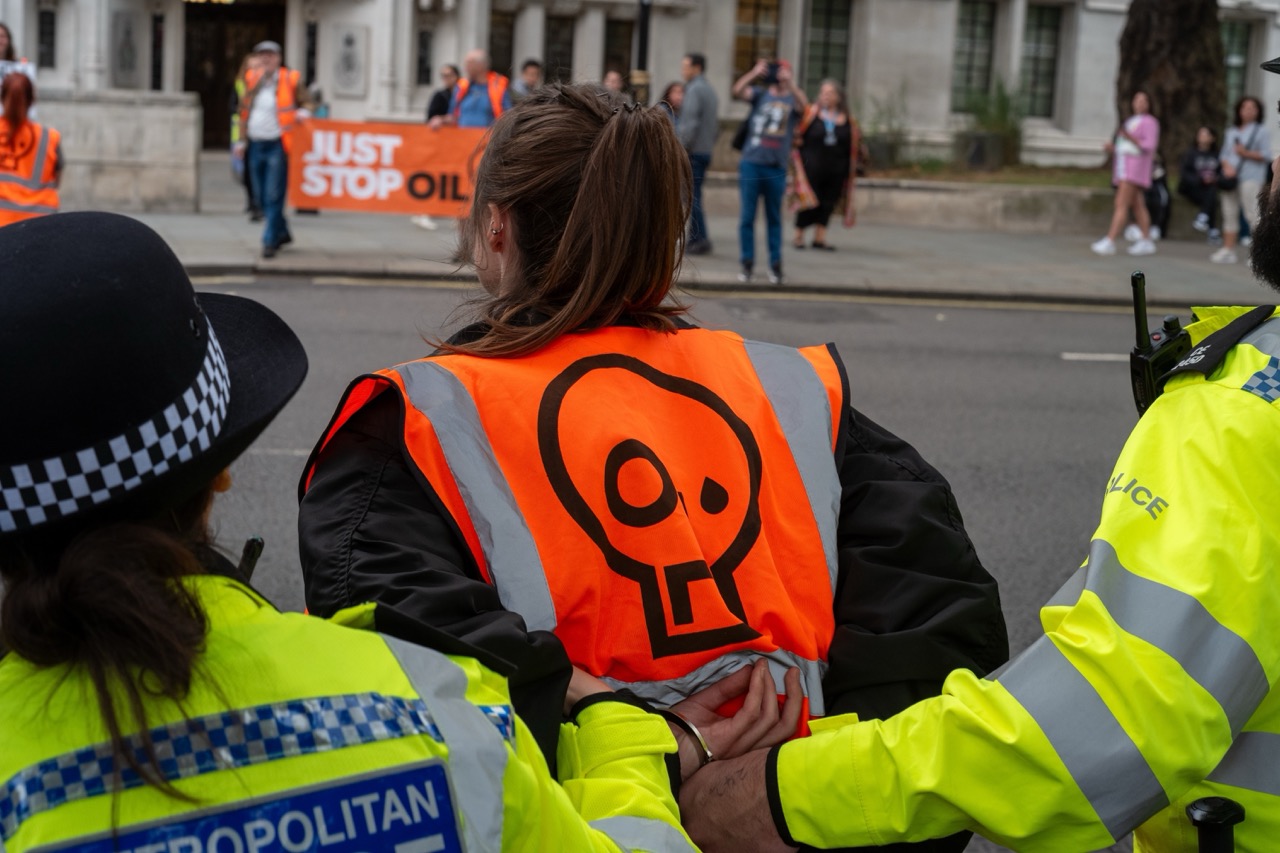
Meanwhile, our ability to dissent is challenged in the process. Activists are overwhelmed not only by the relentless pace of repressive developments, but also by the confusion and uncertainty created by swathes of overlapping legislation (that even police themselves fail to apply consistently).
Recording and publicising how new, anti-protest legislation is used in practice can challenge this environment. As those working in this space will know, between the unlawful use of powers, inconsistency in application, and trickle outwards as different forces adopt and enforce new legislation, the law is not an accurate depiction of how policing is actually experienced.
The more normalised restrictive policing becomes, the greater the need is for documentation that identifies patterns sitting across these individualised incidents. If routinised repression works in part through normalisation, historicisation of these experiences is central to resistance.
The annual nature of Netpol reports provides a running commentary. These reports take stock of changes, new patterns and consistencies, and they allow key patterns to become visible. This equips localised and community-based activist and legal support groups with oversight, allowing informed decision-making around protest and anti-repression tactics, and this collective record forms a pipeline between movements and lawyers, campaign networks and academics. Situating individual experiences within the broader structures of policing – the fabric of which repression has become embedded into – provides an understanding of shared struggles.
Netpol reports are decidedly non-prescriptive: beyond a call to reflect on the importance of preserving the ability to protest, the State of Protest reports aim to provide analysis of the trends so that activists and campaign groups can determine their own appropriate responses.
The securitisation of public dissent demonstrates how protest is portrayed as an inherent threat requiring state intervention. Last year we saw clear escalation with the unprecedented move by the British government to proscribe direct action protest group Palestine Action. The expansion of security frameworks – discussed in detail in the report through the lens of counterterrorism legislation, political narratives, punitive treatment, and surveillance – has pushed on this year, most notably within the erosion of judicial independence under the guise of security (regarding the trials of the Filton 24, Brize Norton 5 and Palestine Action’s Judicial Review).
While most visible within the policing of Palestine solidarity, the conflation of protest with criminal acts and violence has been instrumental in removing the distinction between antifascist and fascist movements (resulting in police violence and suppression of antifascist mobilisations). It also rationalises the ushering in of further powers, for example the introduction of ‘no-mask zones’ under the Crime and Policing Act 2026 in response to “protesters using face coverings to conceal their identities to intimidate the law-abiding majority [and] avoid criminal convictions”.
Securitisation is not just an example of repression, but a process that transforms the wider field of protest policing. When protest is understood through a security lens, that framing justifies exceptional intervention, which is then normalised and applied to ever-expanding forms of dissent, routinising repression.
Taken in isolation, these developments can be dismissed as responses to distinct events or legal cases. Documented collectively, however, they uncover the much broader shift within which dissent is increasingly governed through the logics and institutions of security.
The full report, How Repression Became Routine, can be accessed here: https://netpol.org/2026/03/25/how-repression-became-routine/