Globalise the Intifada: What does it mean?
'Globalise the intifada': a new expert opinion
by Neve Gordon
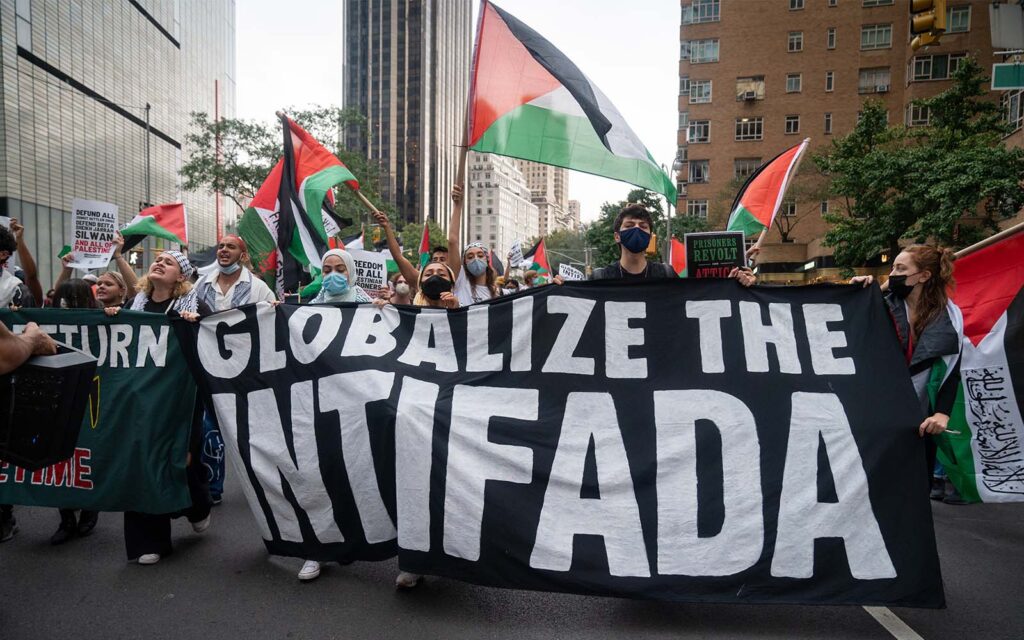
Prime Minister Keir Starmer has called for police to prosecute people chanting “globalise the intifada” during demonstrations, calling it an example of “extreme racism”. So far seven people have been arrested and charged for holding up signs with “globalise the intifada,” but what does the phrase really mean?
Does it really denote an extreme form of racism or is Prime Minister Starmer merely striving to criminalise political protest and free speech criticising the government’s complicity with crimes against humanity, ecocide and genocide in Gaza?
Dr. Abdul Bashid Shaikh, a lecturer in Islamic Studies, and Mustapha Sheikh, a professor of Islamic Thought and Muslim Societies, both from the University of Leeds wrote an expert opinion on the term “intifada,” which before publication was read and endorsed by over two dozen scholars, including Avi Shlaim an emeritus professor from the University of Oxford, Nicola Pratt the President of the British Society for Middle Eastern Studies, Penny Green, the founding director of the International State Crime Initiative, and Yossef Rapoport a Professor in Islamic History and myself.
The expert opinion describes the history of the word “intifada,” how it has been invoked in political discourse, how it has been invoked by pro-Palestinian demonstrators in recent UK marches, and whether the term has any association with antisemitism, hate crime or international terrorism.

The expert opinion maintains that “there is no evidential basis for treating references to intifada in these contexts as encouragement of terrorism or violence. Academic analysis demonstrates that attempts to conflate the term with jihadist violence represent a category error that collapses distinct political, historical and ideological phenomena.”
They further claim that the “interpretation of the term as inherently antisemitic likewise cannot be sustained without abstracting it from its linguistic meaning, historical plurality and social context. The participation of Jewish individuals and organisations in these demonstrations, and their explicit rejection of antisemitic readings of the term as used, further reinforces the conclusion that its communicative function in UK protest settings is political rather than racial or religious.”
The expert opinion accordingly concludes: “On this basis, and consistent with established principles of UK public order jurisprudence, the use of the term intifada in the circumstances examined falls within the domain of lawful political expression that democratic societies have traditionally sought to protect. To construe it otherwise would require a decontextualised and speculative reading of political speech, with significant chilling implications for freedom of expression and the legitimate articulation of dissent.”
You can read the expert opinion in full here.